



Diesel vs Gas Trucks
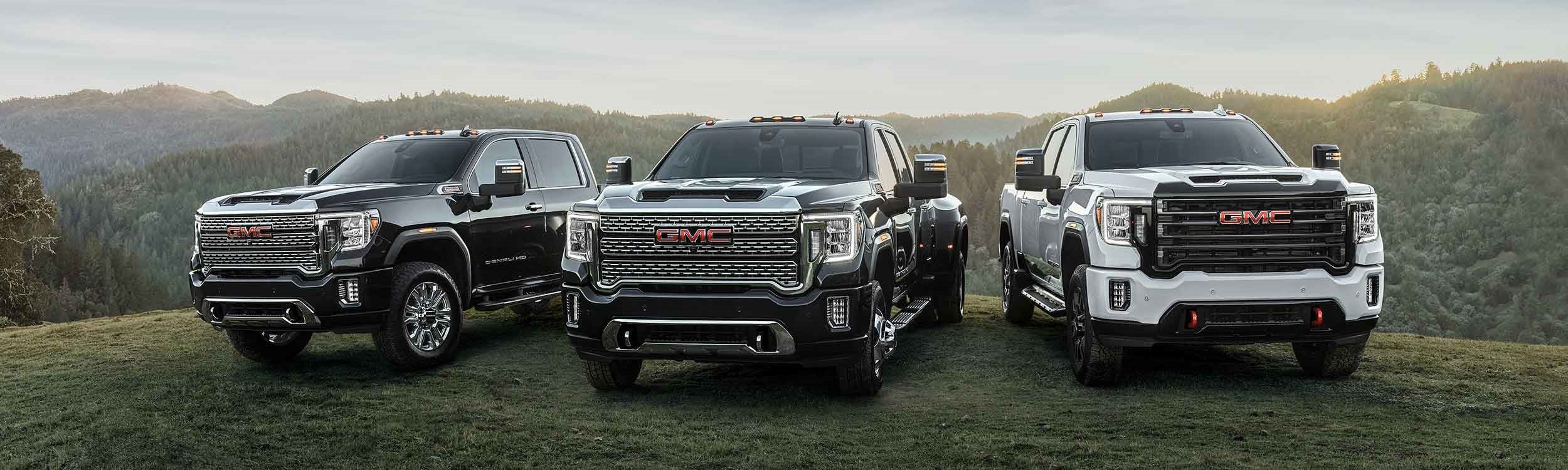
If you’re in the market for a new work vehicle in Great Neck, you’re probably going to be presented with the choice of a diesel vs. gas truck. But how do you know which one is right for you? North Bay GMC has got you covered! We’ll walk you through diesel vs. gas truck pros and cons, so you can get behind the wheel of the truck that will help you get the job done.
Diesel vs. Gas Truck Pros and Cons
Benefits of a Diesel Truck
- Torque & Towing: Typically, diesel trucks produce much more torque than gas trucks. In turn, they can tow much heavier loads than similar gas-powered engines. This trait alone makes them standout options for work trucks and transport vehicles.
- Gas Mileage: Diesel engines tend to be much more efficient than gas engines. While diesel fuel can be more expensive at times, many Bayside drivers prefer diesel fuel because it lessens the number of stops that’ll need to be made to refuel.
- Longevity: Due to their less complex makeup and stronger engine blocks, diesel trucks last much longer than their gasoline counterparts. If you keep your diesel engine well-maintained, you can travel for more than 500,000 miles.
Benefits of a Gas Truck
- Acceleration & Horsepower: While diesel engines deliver more torque, gas engines can deliver the horsepower and acceleration specs that Flushing drivers desire.
- Easier Access to Fuel: Diesel fuel isn’t offered at every gas station in Great Neck. As a result, having a gas-powered truck means that you don’t have to ever worry about when you’ll have the next opportunity to refuel.
- Cheaper Maintenance Costs: Even though diesel engines have a simpler design, this doesn’t inherently mean that they're cheaper to maintain. In fact, because diesel engines have heavy-duty, difficult-to-find parts, getting repairs can oftentimes be expensive.
Additional Information on Diesel vs. Gas Truck Engines
You know the diesel vs. gas trucks pros and cons, however if you’re one who likes the more technical details, here are some more in-depth details you’ll want to know when deciding between a diesel vs. gas truck:
- Gas and diesel engines are both internal combustion engines, meaning that fuel is converted into energy within the engine itself. As for external combustion engines, heat is produced in one location and routed to the engine, elsewhere.
- Gas trucks typically compress air and fuel at a ratio of roughly 10:1. As for diesel trucks, they compress their own air/fuel mixture at a rate between 15:1 and 25:1. Since the result is a much hotter cylinder, diesel fuel is self-igniting and often doesn’t require a spark plug.
- The secret to having an efficient engine is determined by the relative difference between its maximum hot and cold temperature. Higher compression ratios allow for a smaller min-max temperature difference, which accounts, in part, for the diesel engine’s greater fuel economy.
Compare Diesel vs. Gas Trucks at North Bay GMC
Here at North Bay GMC, we’re proud to offer Roslyn shoppers a variety of top-tier, gas and diesel trucks. Browse our new vehicle inventory and used vehicle inventory to find the truck that suits your needs. You can also apply for financing to get pre-approved for your gas or diesel truck of choice!